Benefits of Using Clear Cast Acrylic Sheet

Informational

Clear cast acrylic sheet is a versatile material used across many industries, offering a perfect balance between aesthetics and functionality. 

Whether for signage, displays, or architectural applications, this material delivers high-performance benefits that glass and other plastics often can't match.

In this article, we explore the main benefits of using clear cast acrylic sheets and why it has become a popular choice for businesses and designers alike.

1. Exceptional Optical Clarity

One of the most notable advantages of clear cast acrylic is its crystal-clear transparency, often surpassing that of traditional glass. It offers up to 92% light transmission, which makes it ideal for applications that require maximum visibility and clarity. 

This makes it a top choice for museum display cases, protective barriers, and high-end retail displays.

2. Lightweight and Strong

Despite being half the weight of glass, clear cast acrylic sheets offer remarkable strength and durability

It's up to 10 times more impact resistant than glass, making it much safer and less likely to break or shatter. This makes it a reliable solution for both indoor and outdoor use, especially in environments where safety and longevity are key concerns.

Read also: Acrylic Sheet Thickness Guide: How to Choose the Right One

3. Easy to Fabricate and Customize

Clear cast acrylic is highly workable, allowing it to be cut, drilled, polished, and thermoformed with ease. 

Its flexibility in fabrication makes it an excellent option for custom projects such as illuminated signs, furniture panels, or display units. The clean edges and smooth finish after cutting also add to its premium look.

4. UV and Weather Resistant

Another strong benefit of clear cast acrylic sheet is its resistance to UV radiation and weathering

Unlike some other plastics that yellow or become brittle over time, cast acrylic maintains its clarity and strength even when exposed to sunlight and harsh weather conditions.

This makes it suitable for outdoor signage, greenhouse panels, and marine applications.

Read also: Choose the Right Cast Acrylic Color for Your Project

5. Long-Lasting and Low Maintenance

Clear cast acrylic does not degrade quickly, making it a long-lasting investment. It resists scratches and chemical damage better than many other clear plastics. 

Additionally, it only requires mild soap and water for cleaning, which makes it a low-maintenance material for everyday use.

6. Eco-Friendly and Recyclable

More businesses are turning to clear cast acrylic due to its recyclability and lower environmental impact

Many sheets can be repurposed or recycled into new products, making it a responsible choice for eco-conscious industries.

7. Ideal Applications for Clear Cast Acrylic Sheet

Thanks to these benefits, clear cast acrylic sheets are widely used in:

  • Storefront and POS displays
  • Museum and art gallery cases
  • Protective barriers and sneeze guards
  • Lightboxes and illuminated signage
  • Windows and skylights
  • DIY furniture and decor

Clear cast acrylic sheet is a superior alternative to glass and other plastics in many applications.

Its unmatched clarity, strength, and weather resistance make it an excellent choice for designers, architects, and manufacturers looking for both functionality and beauty.

Ready to explore your clear cast acrylic options? At Margacipta Wirasentosa, we offer high-quality clear cast acrylic sheets in various thicknesses and custom sizes to fit your needs.

Reach to our Instagram or download our Product Catalog for more information.

News Release

Acrylic vs Polycarbonate: Full Comparison

When choosing the right plastic material for your project, the debate between acrylic vs polycarbonate often comes up. 

Both materials are widely used in industries such as construction, signage, and manufacturing, but they have distinct characteristics that make them suitable for different applications.

Acrylic Versus Polycarbonate

Understanding their differences can help you make a more informed decision based on performance, durability, and cost.

1. Strength and Impact Resistance

One of the key differences between acrylic and polycarbonate lies in their strength, but for most applications, acrylic already offers more than enough durability.

Acrylic is a strong and rigid material, even stronger than glass in many cases, making it highly reliable for everyday use. Its solid structure allows it to maintain shape and stability, which is especially important for applications like displays, signage, partitions, and decorative panels.

While polycarbonate is often highlighted for its extreme impact resistance, this level of durability is typically only necessary for high-stress or industrial applications. For general commercial and design purposes, acrylic provides the ideal balance between strength and functionality.

Read also: How to Identify High-Quality Cast Acrylic Sheets

2. Clarity and Aesthetics

If visual clarity is your top priority, acrylic is the clear winner. Acrylic sheets offer exceptional optical clarity, often compared to glass, with a light transmission rate of up to 92%.

This makes it ideal for applications such as retail displays, aquariums, and architectural elements.

Polycarbonate is slightly less clear and may have a subtle haze. While still transparent, it does not provide the same premium look as acrylic.

3. Scratch Resistance

Acrylic has better natural scratch resistance compared to polycarbonate. This makes it more suitable for applications where surface appearance is important.

Polycarbonate, while stronger, is more prone to scratches and often requires additional coatings to maintain its appearance over time.

4. Weather and UV Resistance

Acrylic performs very well in outdoor environments. It has excellent UV resistance and does not yellow easily, making it a great choice for outdoor signage, skylights, and decorative panels.

Polycarbonate can also be used outdoors but usually requires UV coating to prevent yellowing and degradation over time.

5. Workability and Fabrication

Acrylic is easier to cut, polish, and thermoform. It provides clean edges and a glossy finish, making it a favorite for design-focused applications.

Polycarbonate is more flexible and harder to crack during fabrication, but it can be more challenging to achieve a polished, high-end finish.

Read also: Acrylic for Industrial Use: From Machine Guards to Safety Barriers

6. Cost Consideration

In general, acrylic is more affordable than polycarbonate. If budget is a key factor and extreme impact resistance is not required, acrylic is often the more cost-effective option.

Polycarbonate tends to be more expensive due to its superior strength and durability.

Conclusion

The choice between acrylic vs polycarbonate ultimately depends on your project needs. If you prioritize clarity, aesthetics, and cost-efficiency, acrylic is the better option. However, if impact resistance and durability are critical, polycarbonate is the superior material.

For most commercial and design applications, acrylic offers the best balance between performance and visual appeal.

Ready to explore your clear cast acrylic options? At Margacipta Wirasentosa, we offer high-quality clear cast acrylic sheets from 100% virgin MMA in various thicknesses and custom sizes to fit your needs.

Reach to our Instagram or download our Product Catalog for more information.
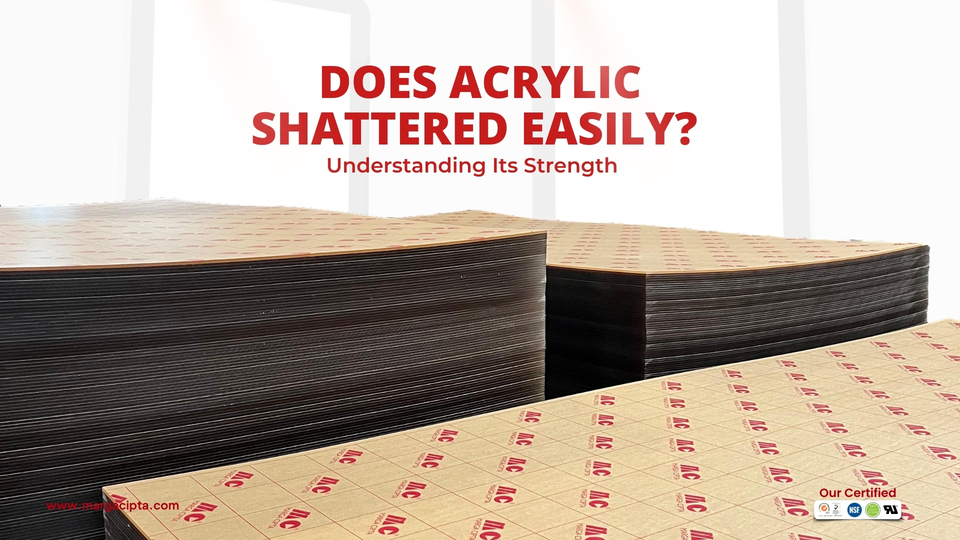
Types of Acrylic: Complete Guide to Different Acrylic Sheets and Their Uses

The main types of acrylic include cast acrylic, extruded acrylic, clear acrylic, colored acrylic, frosted acrylic, and mirrored acrylic.

Each type offers different characteristics, making them suitable for specific fabrication, signage, and decorative applications.

Understanding the different types of acrylic is important when selecting the right material for your project.

What is Acrylic?

Acrylic is a transparent thermoplastic material widely used as an alternative to glass. It is known for its excellent clarity, lightweight structure, and fabrication flexibility.

Compared to glass, acrylic is:

  • More impact resistant
  • Easier to fabricate
  • Lighter in weight
  • Available in various finishes and colors

These qualities make acrylic sheets popular across industries such as retail, construction, interior design, and manufacturing.

Read also: Best Acrylic Thickness for Ornaments: Size Guide for Perfect Results

1. Cast Acrylic

Cast acrylic is produced by pouring liquid acrylic into molds before curing.

This type is known for:

  • Excellent optical clarity
  • Better chemical resistance
  • Superior engraving quality
  • Stronger surface hardness

Cast acrylic is commonly used for:

  • Signage
  • Premium displays
  • Laser engraving
  • Decorative applications

Because of its high-quality finish, cast acrylic is often preferred for projects that require precision and aesthetics.

2. Extruded Acrylic

Extruded acrylic is manufactured through a continuous production process.

Compared to cast acrylic, it offers:

  • More affordable pricing
  • Consistent thickness
  • Easier thermoforming

It is commonly used for:

  • General fabrication
  • Protective panels
  • Cost-efficient production projects

While extruded acrylic is softer than cast acrylic, it remains a practical choice for many standard applications.

3. Clear Acrylic

Clear acrylic sheets are the most commonly used type.

They provide:

  • High transparency
  • Glass-like appearance
  • Smooth surface finish

Applications include:

  • Retail displays
  • Aquariums
  • Protective barriers
  • Signage

Clear acrylic is ideal when visibility and a clean aesthetic are priorities.

4. Colored Acrylic

Colored acrylic sheets are available in a wide range of solid and transparent colors.

Benefits include:

  • Consistent color throughout the sheet
  • Strong visual appeal
  • Better branding flexibility

Colored acrylic is often used for:

  • Decorative ornaments
  • Branding elements
  • Interior accents
  • Creative fabrication projects

5. Frosted Acrylic

Frosted acrylic features a matte surface that diffuses light. It is commonly selected for:

  • Privacy panels
  • Minimalist interior design
  • Elegant signage

Its soft appearance helps reduce glare and fingerprints.

6. Mirrored Acrylic

Mirrored acrylic provides a reflective surface similar to traditional mirrors but with lighter weight and better impact resistance.

Common applications include:

  • Decorative panels
  • Retail displays
  • Event decorations

It is available in various finishes such as silver, gold, and colored mirror effects.

How to Choose the Right Acrylic Type

Choosing the right acrylic depends on:

  • Application purpose
  • Fabrication method
  • Desired appearance
  • Budget considerations

For example:

  • Cast acrylic → better for engraving and premium designs
  • Extruded acrylic → suitable for cost-efficient fabrication
  • Frosted acrylic → ideal for elegant and modern finishes

Read also: Acrylic vs Glass for Plaque: Which Material is Better?

Why Material Quality Matters

High-quality acrylic sheets provide:

  • Better clarity
  • Consistent thickness
  • Improved fabrication performance

Using reliable materials helps reduce production issues and ensures professional results.

Marga Cipta supplies premium acrylic sheets in various types and finishes to support different fabrication and design needs.

Conclusion

Understanding the different types of acrylic helps you select the right material for your project.

From clear and colored acrylic to cast and mirrored finishes, each type offers unique advantages for specific applications. By choosing high-quality acrylic sheets, businesses and manufacturers can achieve more durable and visually appealing results.

Ready to explore our cast acrylic options? At Margacipta Wirasentosa, we offer high-quality clear cast acrylic sheets from 100% virgin MMA in various thicknesses and custom sizes to fit your needs.

Reach out to our Instagram or download our Product Catalog for more information.
Choose the Right Cast Acrylic Color for Your Project

When working with acrylic sheets, color isn't just about aesthetics, it plays a functional role in enhancing visibility, brand identity, and even light diffusion. 

Among all types of acrylic, cast acrylic sheets stand out for their vibrant color range, clarity, and versatility in various applications.

In this article, let’s explore the different color options available for cast acrylic and how each one is commonly used in industries such as signage, interior design, and product display.

Why Choose Colored Cast Acrylic Sheets?

Cast acrylic is known for its durability, excellent workability, and brilliant color options. 

Unlike extruded acrylic, cast acrylic offers deeper pigmentation, allowing for better light diffusion, UV resistance, and long-term color stability.

Whether you're designing a lightbox, a retail display, or custom decor, the color of your acrylic sheet can influence both function and appearance.

Various Cast Acrylic Colors and Their Common Uses

1. Red Cast Acrylic

Red acrylic sheets are bold, eye-catching, and often used for:

  • LED signage and illuminated logos
  • Emergency signs and alert messages
  • Retail branding to match corporate identity

Thanks to their light-transmitting properties, red acrylic works beautifully when backlit.

2. Orange Cast Acrylic

Orange adds warmth and vibrancy. It’s ideal for:

  • Creative store displays
  • Children’s products or spaces due to its playful tone
  • Event decorations for a fun, energetic feel

Read also: What Is Cast Acrylic Used For? A Closer Look

3. Yellow Cast Acrylic

Bright and energetic, yellow acrylic is perfect for:

  • Directional signage and caution markers
  • Art installations requiring a sunny pop of color
  • Menu boards or display backdrops

4. Green Cast Acrylic

Green symbolizes freshness and balance. It’s commonly used in:

  • Eco-themed displays
  • Interior accents such as partitions or wall decor
  • Hospitality and health branding

5. Blue Cast Acrylic

Calm and professional, blue acrylic suits:

  • Corporate signage
  • Architectural features
  • Exhibition booths and brand walls

Its cool tones offer a sense of trust and reliability.

6. Purple Cast Acrylic

Often associated with creativity and luxury, purple is used in:

  • Boutique signage
  • Cosmetics displays
  • Artistic or promotional installations

It’s a strong choice for niche branding and elegant design.

Read also: Benefits of Using Clear Cast Acrylic Sheet

7. Pink Cast Acrylic

Fun, friendly, and soft, pink acrylic is great for:

  • Beauty product displays
  • Kids' room decor
  • Event props for birthdays, weddings, or launches

Pink offers emotional warmth and visual softness.

8. Clear/Transparent Cast Acrylic

The most versatile option, clear acrylic is ideal for:

  • Protective barriers and sneeze guards
  • Display cases and shelves
  • DIY projects and signage overlays

Its high light transmission and glass-like appearance make it perfect for showcasing products.

9. White Opaque Cast Acrylic

White sheets are commonly used for:

  • Lightboxes and illuminated signs
  • Acrylic boxes for packaging or storage
  • Architectural models and minimalist design features

Opaque white diffuses light beautifully and offers a clean, modern finish.

Choosing the Right Color for Your Application

When selecting a color for your acrylic sheet, consider:

  • Lighting conditions (especially for backlit applications)
  • Brand or thematic color consistency
  • Functionality. For example, warning signs should use red or yellow
  • Visual impact depending on the setting (retail, industrial, personal)

Colored cast acrylic sheets offer endless possibilities for creative and functional applications. Whether you're a designer, fabricator, or business owner, choosing the right acrylic color can enhance the overall effect of your project.

At Margacipta Wirasentosa, we provide high-quality cast acrylic sheets in a wide range of colors, from bold reds to crisp whites, ensuring you have the perfect match for your needs.

Contact our team today or explore our Instagram to explore our color range and find the perfect sheet for your next project.

Clear Acrylic Sheet vs Glass: Pros, Cons & Key Differences

Clear acrylic sheet and glass may look similar, but they have significant differences in strength, weight, safety, and flexibility.

In general, clear acrylic sheet is lighter, more impact-resistant, and easier to fabricate, while glass is more scratch-resistant and traditionally used for windows.

Because of these advantages, acrylic sheets are widely used for signage, display cases, partitions, and architectural panels.


Key Differences Between Acrylic Sheet and Glass

Feature

Clear Acrylic Sheet

Glass

Weight

About 50% lighter

Heavier

Impact resistance

Up to 10–17× stronger

Can shatter easily

Transparency

Up to 92% light transmission

Around 90%

Fabrication

Easy to cut, bend, and shape

Difficult to modify

Safety

Shatter-resistant

Breaks into sharp pieces

Scratch resistance

Lower than glass

Higher

These properties make acrylic a popular alternative for many modern applications.

Read also: Cost Breakdown: How Acrylic Can Help You Save Budget in Long-Term Projects

Pros of Clear Acrylic Sheet

Clear acrylic sheets offer several advantages compared to glass.

1. Much More Impact Resistant

Acrylic is significantly stronger against impact, making it safer for environments where breakage is a concern.

2. Lightweight

Acrylic weighs roughly half as much as glass, making installation easier and reducing structural load.

3. Easy to Fabricate

Acrylic can be:

  • Laser cut
  • CNC machined
  • Heat bent
  • Thermoformed

This flexibility makes it ideal for custom designs.

4. Excellent Optical Clarity

High-quality acrylic can achieve up to 92% light transmission, making it one of the clearest plastic materials available.

Cons of Clear Acrylic Sheet

Despite its advantages, acrylic also has limitations.

1. More Prone to Scratches

Compared to glass, acrylic surfaces can scratch more easily.

2. Higher Thermal Expansion

Acrylic expands more when exposed to temperature changes.

3. Chemical Sensitivity

Certain solvents can damage acrylic surfaces.

When to Choose Acrylic Instead of Glass

Acrylic sheets are better when you need:

  • Lightweight panels
  • High impact resistance
  • Custom shapes or fabrication
  • Safer materials for public environments

Common applications include:

  • Retail signage
  • LED light boxes
  • Display stands
  • Protective barriers
  • Architectural panels

Read also: Acrylic for Industrial Use: From Machine Guards to Safety Barriers

FAQ: Clear Acrylic Sheet vs Glass

Is acrylic stronger than glass?

Yes. Acrylic is significantly more impact resistant than glass and less likely to shatter.

Is acrylic clearer than glass?

High-quality acrylic can transmit slightly more light than glass, making it very clear.

Does acrylic scratch easily?

Yes, acrylic is more prone to scratches compared to glass.

Can acrylic replace glass?

In many applications such as signage, displays, and partitions, acrylic can effectively replace glass.

Looking for High-Quality Clear Acrylic Sheets?

If you need a material that is lighter, safer, and easier to fabricate than glass, clear acrylic sheets are a reliable alternative for many applications such as signage, displays, partitions, and architectural panels.

PT. Margacipta Wirasentosa supplies high-quality acrylic sheets with excellent optical clarity and consistent thickness, suitable for both commercial and industrial use.

  • High transparency
  • Durable and impact resistant
  • Easy to cut, shape, and fabricate
  • Suitable for signage, displays, and protective panels

Contact our team at info@margacipta.com or explore our acrylic sheet products to find the right material for your project.